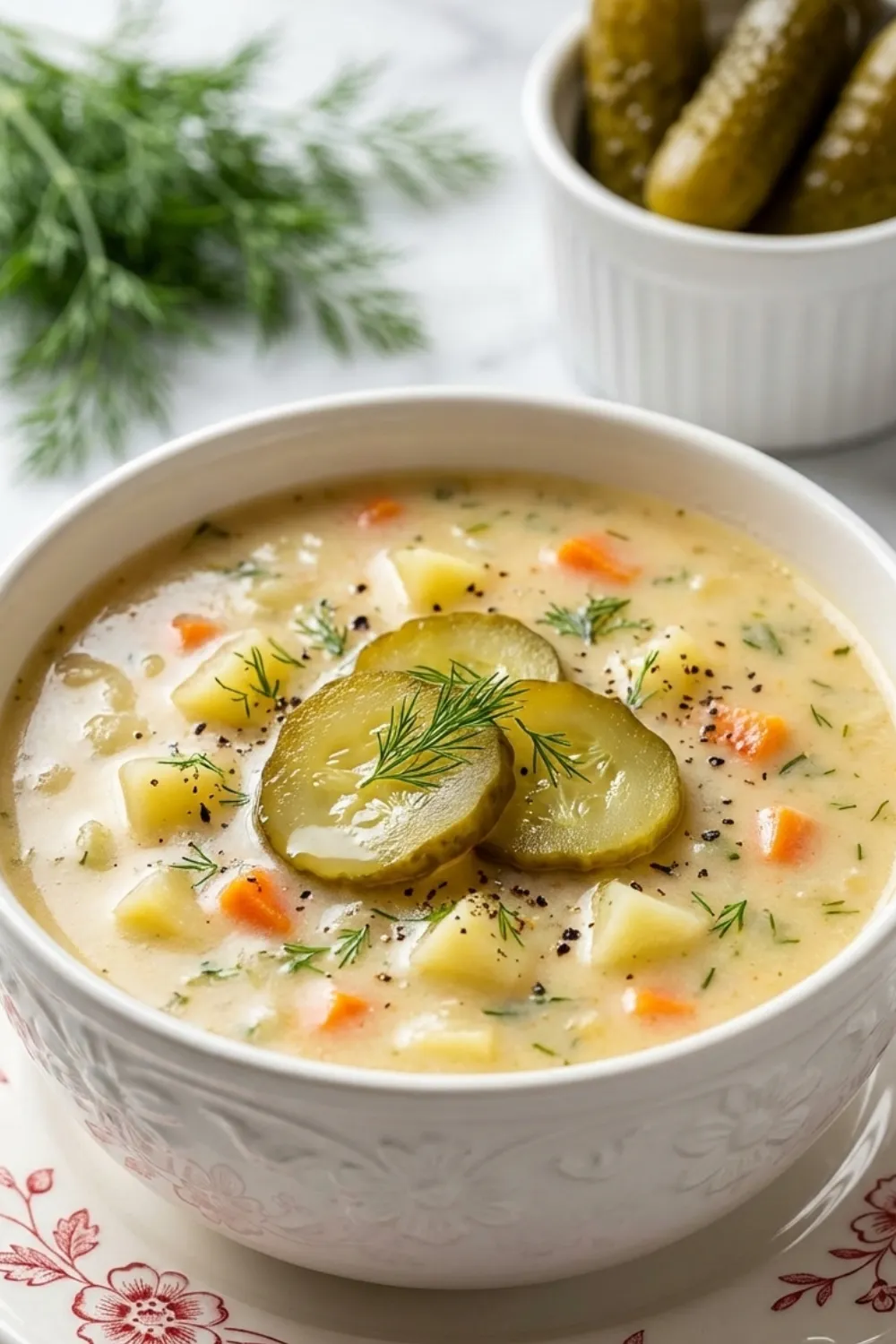

I’ll be honest — the first time I heard about dill pickle soup, I was skeptical. But after one spoonful, I was completely sold.
This soup is creamy, tangy, comforting, and surprisingly balanced, with the unmistakable flavor of dill pickles mellowed by potatoes and a rich broth.
It’s cozy enough for winter but bright sufficient to crave year-round.
If you love pickles and enjoy soups with personality, this recipe will quickly earn a place in your regular rotation.
It’s simple to make, incredibly satisfying, and always sparks conversation at the table.
Recipe Highlights
This dill pickle soup delivers bold flavor without being overwhelming. The pickle brine adds tang, the potatoes bring heartiness, and the creamy base ties everything together beautifully.
It’s rich but not heavy, savory with just enough acidity to keep each bite interesting.
What makes this soup special is its balance. Even people who think they might not like pickle soup are often surprised by how mellow and comforting it tastes.
The dill flavor comes through clearly, but it’s softened by the addition of butter, broth, and cream, resulting in a smooth, velvety finish.
It’s also a forgiving recipe. You don’t need fancy equipment, and small adjustments are easy depending on how tangy or creamy you like your soup.
- Creamy, tangy, and deeply comforting
. - Perfect for pickle lovers
. - Simple ingredients and easy preparation
. - Great make-ahead soup that reheats well
Ingredient Notes
- Butter: Adds richness and depth to the soup base while helping sauté the vegetables gently.
. - Yellow Onion: Provides a mild sweetness that balances the tangy pickle flavor.
. - Carrots: Add subtle sweetness and color, preventing the soup from tasting too sharp.
. - Garlic: Enhances the savory backbone of the soup without overpowering the pickles.
. - Chicken Broth: Creates a flavorful base that supports the creamy texture and tangy notes.
. - Russet Potatoes: Give the soup body and heartiness, helping thicken it naturally.
. - Dill Pickles: The star ingredient — choose good-quality dill pickles with a clean, garlicky flavor.
. - Pickle Juice: Adds signature tang and brightness that defines the soup.
. - Heavy Cream: Softens the acidity and creates a luxurious, creamy texture.
. - Fresh Dill: Reinforces the pickle flavor and adds freshness at the end.
. - Salt & Black Pepper: Used carefully to balance flavors without overpowering the pickles.
How to Make My Dill Pickle Soup
The process starts by building a flavorful base with butter, onions, and garlic. Gently sautéing these ingredients helps develop sweetness and depth before adding the broth and potatoes.
Once the potatoes are simmering, they release starch into the soup, which naturally thickens the broth and creates that cozy, spoon-clinging texture.
Next comes the signature element: dill pickles and pickle juice. These are added gradually so the soup stays balanced rather than overly sour.
Allowing the soup to simmer gently at this stage helps the flavors meld together, softening the sharpness of the pickles while preserving their tangy character.
To finish, the soup is enriched with cream or sour cream and fresh dill. This final step should be done gently over low heat to prevent curdling and preserve the soup’s silky texture.
Once seasoned and stirred, the result is a smooth, creamy soup with tender potatoes and just the right amount of dill pickle punch.
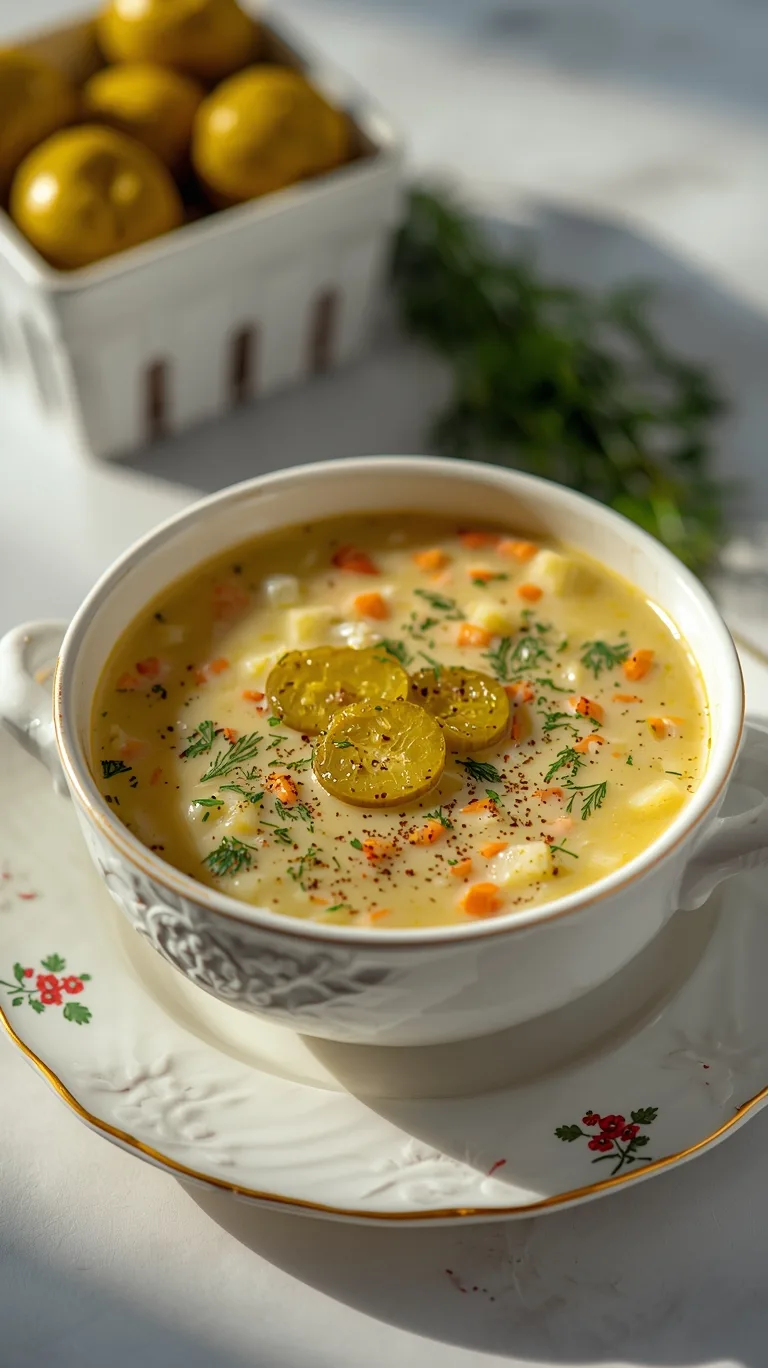
Serving Suggestions
- Serve with crusty bread or buttered rye toast
. - Pair with a simple green salad
. - Add grilled cheese or ham sandwiches on the side
. - Garnish with extra dill or sliced pickles
Variations & Substitutions
For a heartier version, add shredded chicken or diced ham toward the end of cooking. Both pair well with the creamy, tangy base and turn the soup into a more filling meal.
If adding protein, reduce the broth slightly so the soup doesn’t become too thin.
You can also adjust the dairy to suit your preferences. Sour cream creates a tangier finish, while heavy cream results in a milder, richer soup.
For a lighter option, use half-and-half, keeping in mind the soup may be slightly thinner.
If fresh dill isn’t available, dried dill can work in a pinch — just use less, as it’s more concentrated.
You can also add grated carrots or celery for extra texture and color without changing the overall flavor profile.
Can I Make This Ahead Of Time?
Yes, Dill Pickle Soup is a great make-ahead option. The flavors actually improve after resting, as the pickle brine and herbs have time to fully infuse the broth.
Make the soup up to one day in advance and store it covered in the refrigerator.
When reheating, do so gently over low heat, stirring frequently. Avoid boiling, as this can affect the texture of the potatoes and dairy.
If the soup thickens too much overnight, simply add a splash of broth or water while reheating.
For best results, consider adding fresh dill just before serving if making the soup ahead.
This keeps the herb flavor bright and fresh rather than muted.
Common Mistakes to Avoid
One common mistake is adding the pickle juice too early or all at once. Doing so can overpower the soup and make it overly acidic.
Always add pickle juice gradually and taste as you go.
Another issue is cooking the soup at too high a temperature after adding dairy. This can cause curdling or separation, which affects both texture and appearance.
Keep the heat low and stir gently once cream or sour cream is incorporated.
Finally, avoid undercooking the potatoes. They should be fully tender so they blend seamlessly into the creamy broth.
Slightly firm potatoes can make the soup feel uneven rather than smooth and comforting.
Tips for the Best Dill Pickle Soup
Use good-quality dill pickles and pickle juice — this makes a noticeable difference. Refrigerated deli-style pickles often have a fresher flavor and cleaner brine than shelf-stable varieties.
Avoid sweet pickles entirely, as they can throw off the savory balance of the soup.
Keep the heat gentle once dairy is added. High heat can cause the soup to separate or curdle, especially if you’re using sour cream.
Tempering the cream with a bit of hot broth before stirring it in helps maintain a smooth, cohesive texture.
Finally, season gradually. Because pickle juice and broth both contain salt, it’s best to wait until the very end before adding extra salt.
A small splash of additional pickle juice right before serving can brighten the flavors without overwhelming the soup.
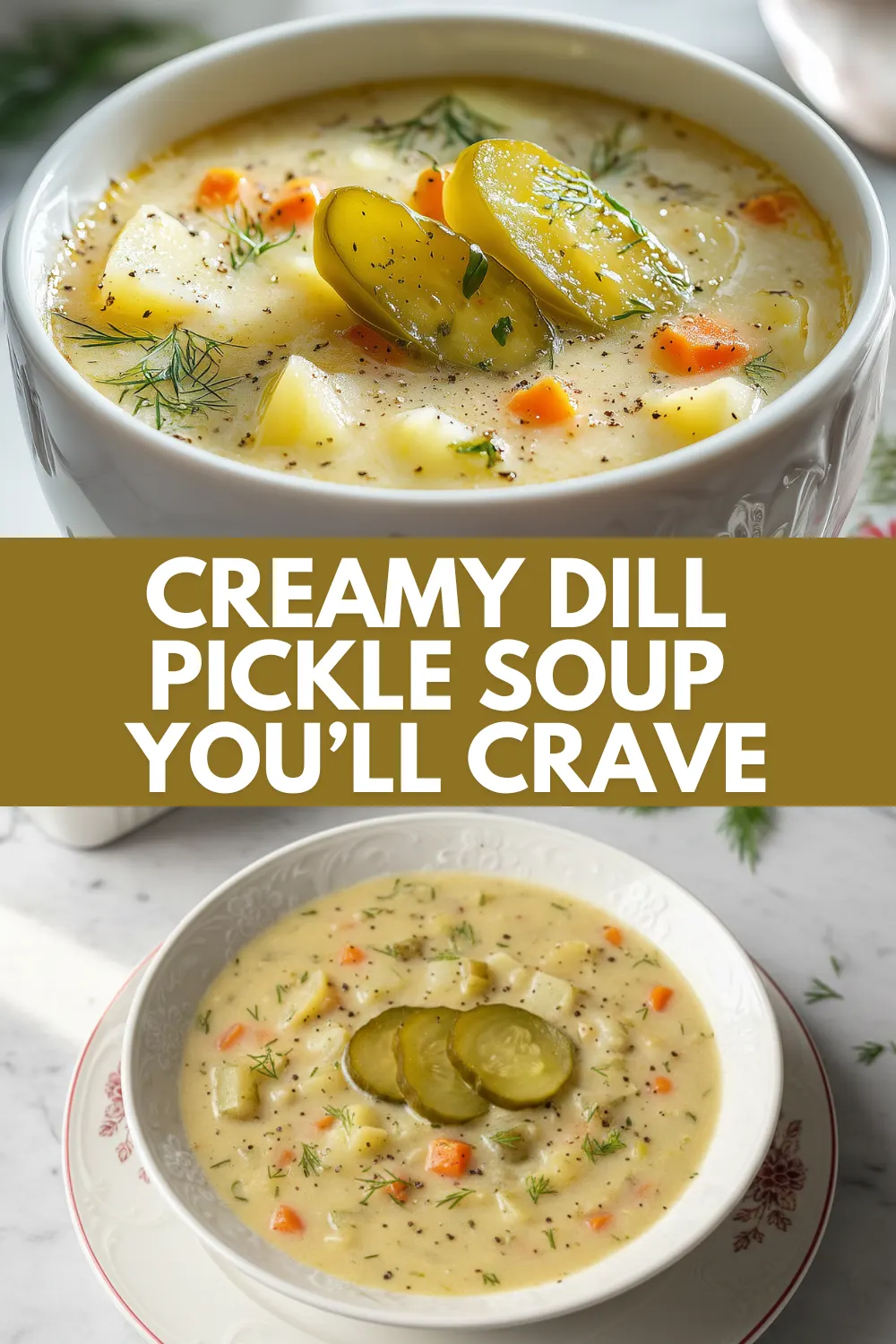
Creamy Dill Pickle Soup (Comfort Food Classic)
Course: SoupCuisine: Eastern European–Inspired Comfort FoodDifficulty: Easy6
servings15
minutes30
minutes320
kcalThis creamy dill pickle soup is comforting, tangy, and surprisingly addictive. It’s an easy recipe that transforms simple ingredients into a cozy, flavorful bowl of soup.
Ingredients
¼ cup unsalted butter
1 medium yellow onion, diced
1 cup carrots, finely chopped
2 cloves garlic, minced
6 cups chicken broth
2 cups russet potatoes, peeled and diced
1 ½ cups dill pickles, chopped
¾ cup pickle juice
1 cup heavy cream
2 tablespoons fresh dill, chopped
½ teaspoon black pepper
Salt to taste
Directions
- Melt butter in a large pot over medium heat.
- Add the onion and carrots and sauté until softened.
- Stir in garlic and cook for 30 seconds.
- Add chicken broth and potatoes; bring to a boil.
- Reduce the heat and simmer until potatoes are tender.
- Stir in pickles and pickle juice.
- Lower the heat and slowly add heavy cream.
- Simmer gently until slightly thickened.
- Season with pepper, salt, and fresh dill.
- Serve warm.
Notes
- Always taste before adding extra salt
- Fresh dill makes a big difference
- Let the soup rest for the best flavor
Storage & Make-Ahead Tips
- Store leftovers in an airtight container in the refrigerator for up to 4 days
. - Reheat gently on the stovetop to avoid curdling
. - Stir well before serving
. - Flavor improves after a day in the fridge
Frequently Asked Questions
Is dill pickle soup actually sour?
It has a pleasant tang, but it’s balanced by the cream and potatoes, making it more savory than sour.
Can I freeze dill pickle soup?
Freezing is not recommended, as the dairy and potatoes can change texture when thawed. Refrigeration works best.
What pickles work best for this soup?
Classic dill pickles with garlic and dill flavor work best. Avoid sweet or bread-and-butter pickles.
Can I make this soup vegetarian?
Yes, simply use vegetable broth instead of chicken broth and keep all other ingredients the same.