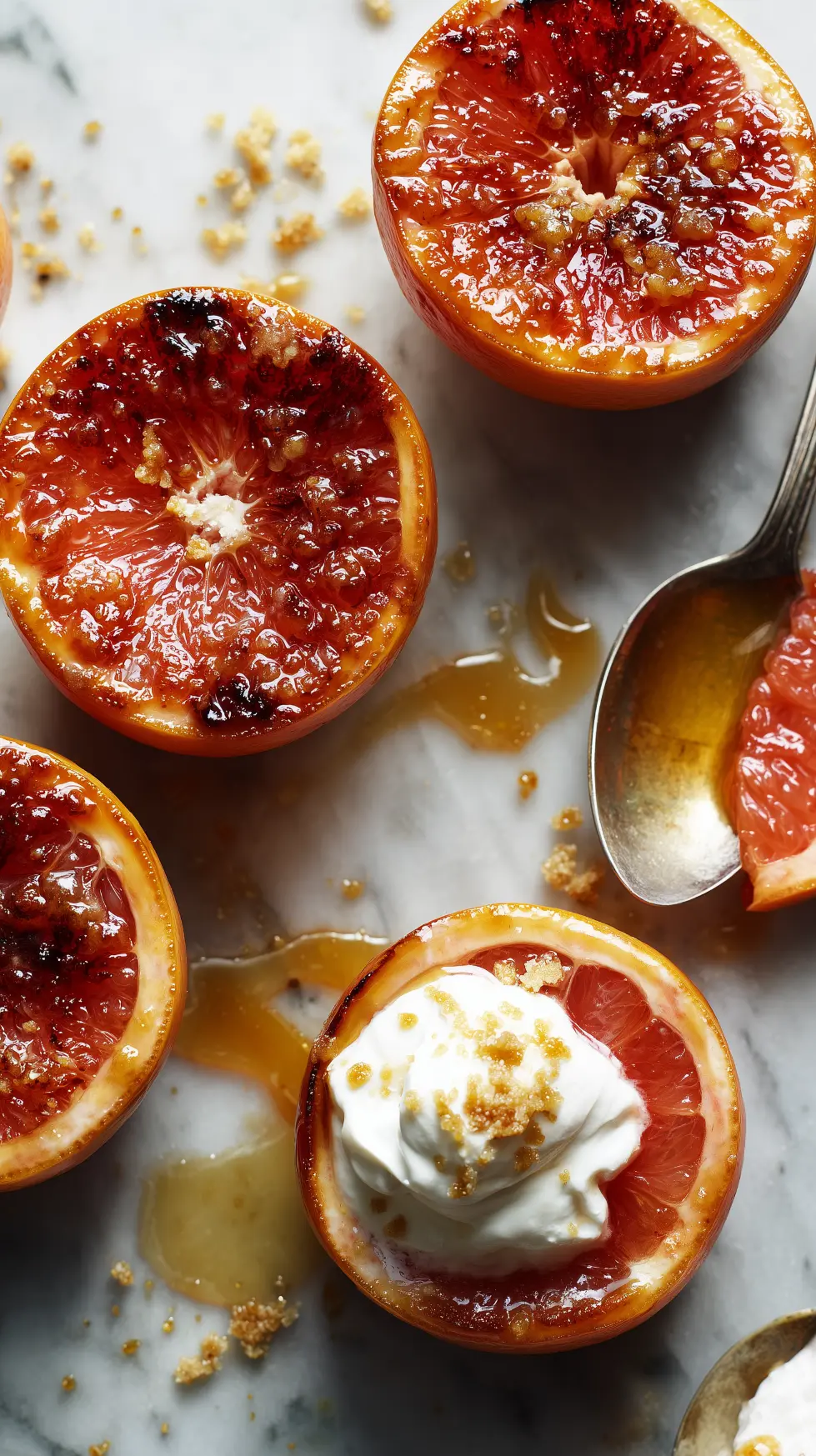

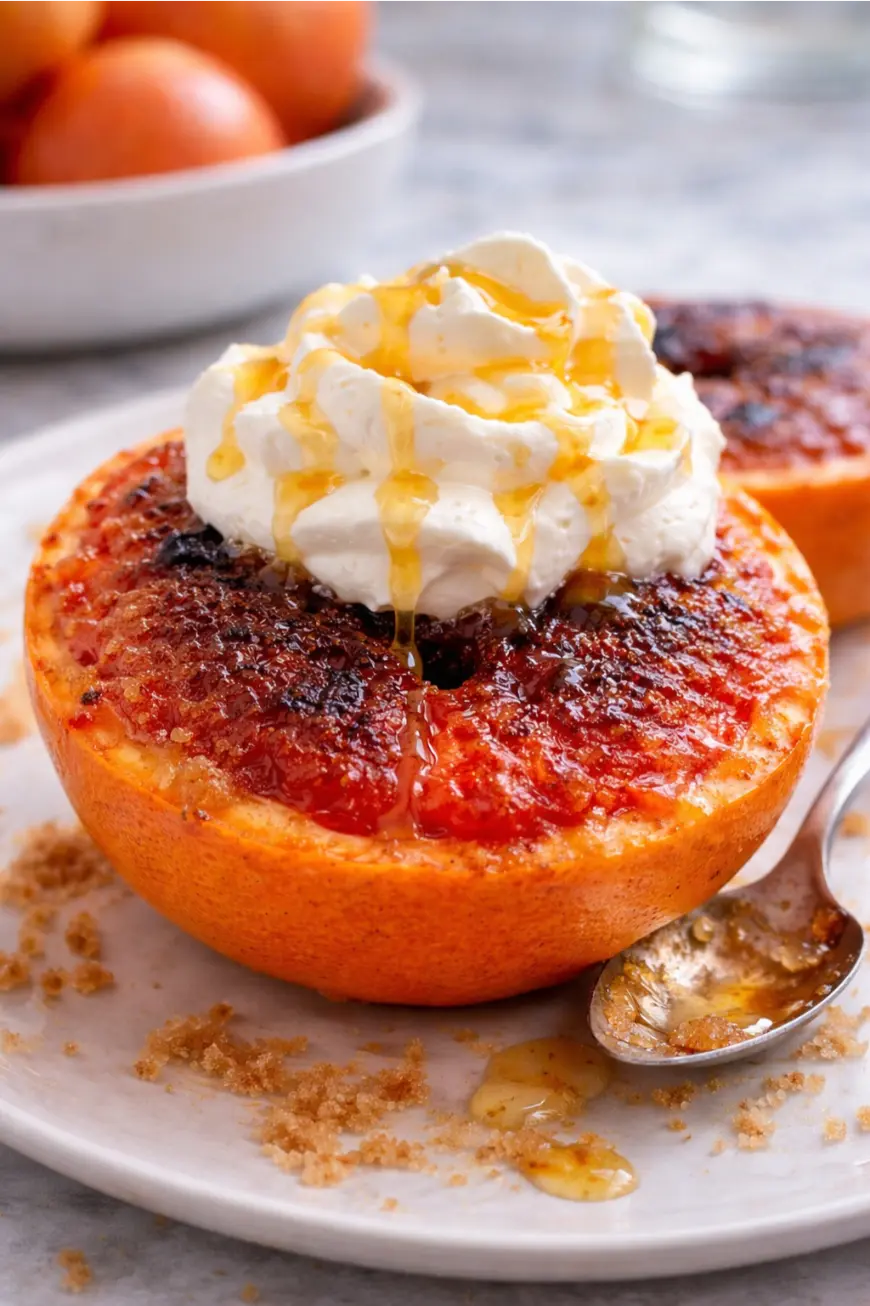
I love recipes that feel a little fancy but take almost no effort, and this caramelized brown sugar grapefruit is exactly that.
It’s one of those dishes that looks like something you’d order at a brunch café, yet it comes together in minutes with just a handful of ingredients.
The heat brings out the grapefruit’s natural sweetness, while the brown sugar melts into a crackly, caramelized topping that’s hard to resist.
This recipe is perfect when you want something light but satisfying—whether it’s a bright breakfast, a simple dessert, or a palate-cleansing finish to a meal.
It’s citrus-forward, warm, and comforting all at once, and it highlights grapefruit in the best possible way.
Recipe Highlights
Caramelized brown sugar grapefruit is a wonderful way to enjoy citrus in a warm, dessert-like format without adding heaviness.
The broiler transforms the brown sugar into a bubbling, slightly crisp topping that balances the grapefruit’s tang beautifully.
Each bite delivers a contrast of juicy citrus flesh and caramelized sweetness that feels indulgent yet refreshing.
What I love most about this recipe is its flexibility. You can keep it simple or dress it up with yogurt, whipped cream, or even a drizzle of honey.
It works just as well for a quiet weekday breakfast as it does for an elegant brunch spread or light dessert after dinner.
Why you’ll love this recipe:
- Naturally sweetened with fruit and brown sugar
. - Ready in under 10 minutes
. - Perfect for breakfast, brunch, or dessert
. - Minimal ingredients, maximum flavor
. - Easy to customize with toppings and spices
Ingredient Notes
- Grapefruit: Fresh ruby red or pink grapefruit works best here. These varieties are naturally sweeter and less bitter, making them ideal for caramelizing.
. - Brown Sugar: Brown sugar creates the signature caramelized crust. Light or dark brown sugar both work—dark brown sugar adds a deeper molasses flavor.
. - Granulated Sugar (optional): A small amount of granulated sugar can be mixed with brown sugar for extra crunch and even caramelization.
. - Butter (optional): A tiny dab of butter melts into the sugar and enhances richness, though it’s completely optional.
. - Vanilla Extract (optional): Just a drop adds warmth and rounds out the citrus flavor.
How to Make My Caramelized Brown Sugar Grapefruit
This recipe comes together quickly, but the details matter to get that perfectly caramelized top and juicy interior.
Step 1: Prepare the Grapefruit
Slice each grapefruit in half horizontally. If needed, trim a very thin slice from the bottom so each half sits flat. Loosen the segments gently with a knife for easier eating later.
Step 2: Add the Sugar Topping
Sprinkle an even layer of brown sugar over each grapefruit half. If using granulated sugar, mix it with the brown sugar before sprinkling. Add a tiny dot of butter in the center if desired.
Step 3: Broil Until Caramelized
Place the grapefruit halves on a baking sheet and broil for 3–6 minutes, watching closely. The sugar should bubble, melt, and develop dark caramelized spots without burning.
Step 4: Cool Slightly and Serve
Remove from the oven and let cool for 1–2 minutes. The sugar will harden slightly as it sets. Serve warm as-is or with your favorite toppings.
Serving Suggestions
- Serve with Greek yogurt or vanilla yogurt for breakfast
. - Top with whipped cream or mascarpone for dessert
. - Pair with granola for added crunch
. - Serve alongside brunch dishes like scones or muffins
. - Finish with a drizzle of honey or maple syrup
Variations & Substitutions
If you want to switch up the flavor profile, try adding a pinch of cinnamon, cardamom, or ginger to the brown sugar before sprinkling it over the grapefruit.
These warm spices complement the citrus beautifully and add depth without overpowering the dish.
You can also substitute the grapefruit with other citrus fruits. Oranges, blood oranges, or even pomelos work well, though cooking times may vary slightly depending on size and juiciness.
For a lighter option, use coconut sugar or maple sugar instead of brown sugar.
Both caramelize nicely and add subtle flavor differences while keeping the recipe refined and naturally sweet.
Can I Make This Ahead Of Time?
This recipe is best enjoyed fresh, right after caramelizing, when the sugar topping is crisp, and the grapefruit is warm.
Preparing it too far in advance will cause the caramelized sugar to soften as it absorbs moisture from the fruit.
That said, you can prep elements ahead of time. Grapefruits can be sliced and refrigerated for several hours before cooking, making it easy to broil them just before serving.
If you’re serving this for brunch, I recommend broiling the grapefruit right as guests arrive—it only takes a few minutes and delivers the best texture and flavor.
Common Mistakes to Avoid
One common mistake is using too much sugar. While it may be tempting to pile it on, excess sugar can burn before fully caramelizing.
A thin, even layer is all you need for a beautiful crust.
Another issue is broiling for too long. Grapefruit is delicate, and extended heat can intensify bitterness.
As soon as the sugar is bubbling and golden, remove it from the oven.
Finally, avoid serving straight from the broiler. Giving the grapefruit a brief rest helps prevent burned tongues and improves the texture of the caramelized topping.
Tips for the Best Caramelized Brown Sugar Grapefruit
For the best results, always use fresh, ripe grapefruit—ruby red varieties tend to be sweeter and less bitter, which pairs beautifully with the brown sugar.
Make sure your broiler is fully preheated so the sugar caramelizes quickly without overcooking the fruit.
Keep a close eye on the grapefruit while broiling. Sugar can go from perfectly caramelized to burnt very quickly, especially depending on your oven.
If you notice uneven browning, rotate the pan halfway through for a more consistent finish.
Finally, let the grapefruit cool just slightly before serving. This short rest allows the caramelized sugar to firm up, giving you that satisfying crackle when you dig in with a spoon.
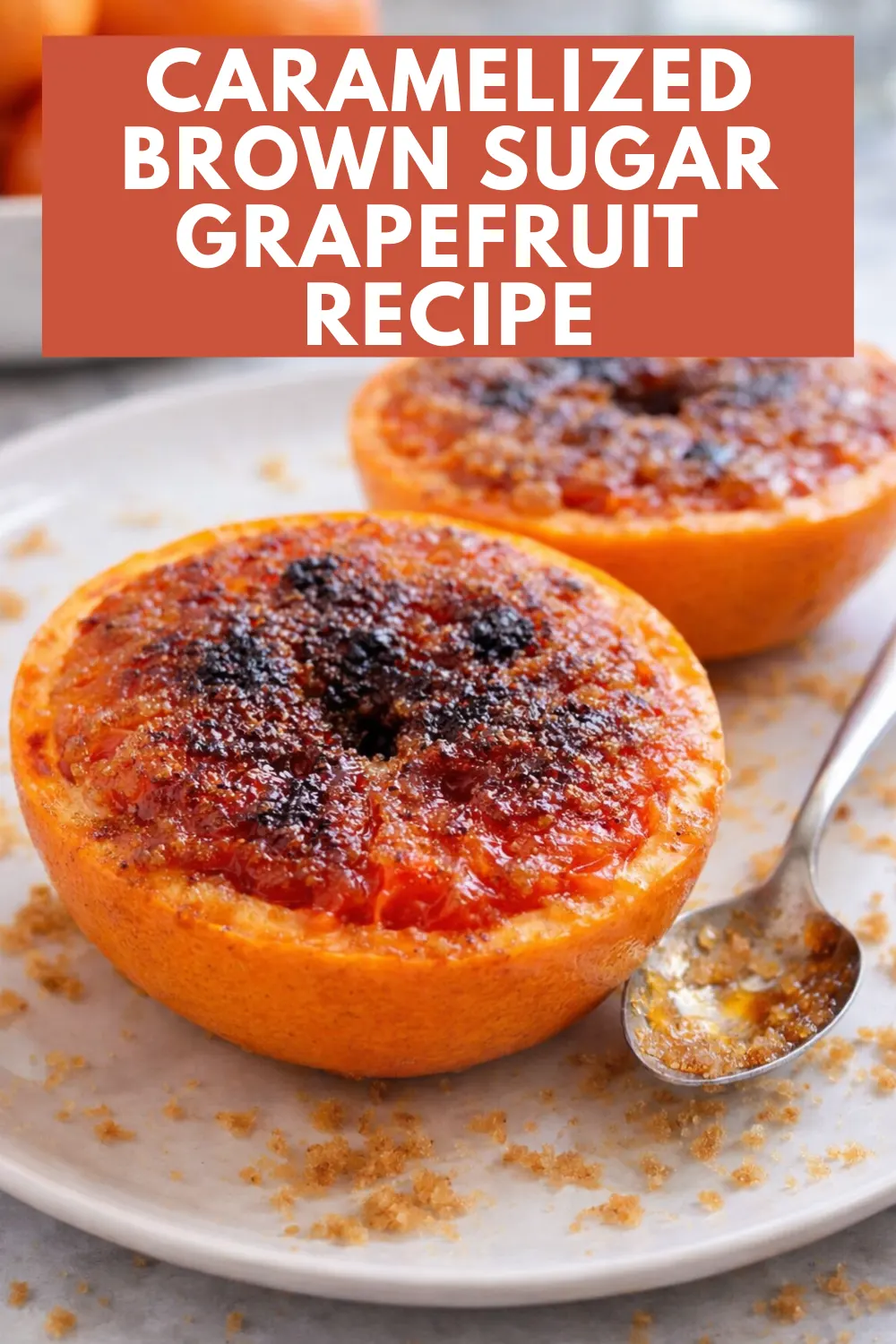
Caramelized Brown Sugar Grapefruit Recipe
Course: Breakfast, Dessert, BrunchCuisine: AmericanDifficulty: Easy2
servings5
minutes5
minutes120
kcalCaramelized brown sugar grapefruit is a fast, elegant way to enjoy citrus with minimal effort. Warm, juicy, and lightly crisped on top, it’s perfect for breakfast, brunch, or a light dessert.
Ingredients
1 grapefruit, halved
2 tablespoons brown sugar
1 teaspoon granulated sugar (optional)
1 teaspoon butter, divided (optional)
¼ teaspoon vanilla extract (optional)
Directions
- Preheat the broiler to high and line a baking sheet with parchment paper or foil.
- Slice the grapefruit in half horizontally and loosen the segments with a small knife.
- Combine brown sugar and granulated sugar if using, then sprinkle evenly over each grapefruit half.
- Add a tiny dot of butter to the center of each half, if desired.
- Place grapefruit halves under the broiler and cook for 3–6 minutes until the sugar melts and caramelizes.
- Remove from the oven and allow to cool briefly before serving.
Notes
- Always use oven-safe dishes when broiling
- Adjust sugar based on grapefruit sweetness
- Best served warm for ideal texture
Storage & Make-Ahead Tips
- Best enjoyed immediately while warm
. - Can be prepared and broiled just before serving
. - Leftovers do not store well once caramelized
. - Grapefruit halves can be prepped ahead and broiled later
Frequently Asked Questions
Is caramelized grapefruit bitter?
Caramelizing grapefruit significantly reduces bitterness by mellowing the citrus oils and balancing them with sugar. Ruby red grapefruit tends to be the least bitter.
Can I use white grapefruit instead of ruby red?
Yes, but white grapefruit is more bitter, so you may want to increase the sugar slightly.
Can I make this without a broiler?
A kitchen torch works well as an alternative, allowing precise caramelization.
Is this recipe healthy?
Yes, it’s naturally gluten-free and relatively low in calories. The recipe relies mostly on fresh fruit, with just a small amount of added sugar.
Is this recipe keto-friendly?
Not as written, but you can experiment with sugar substitutes designed for caramelizing.