

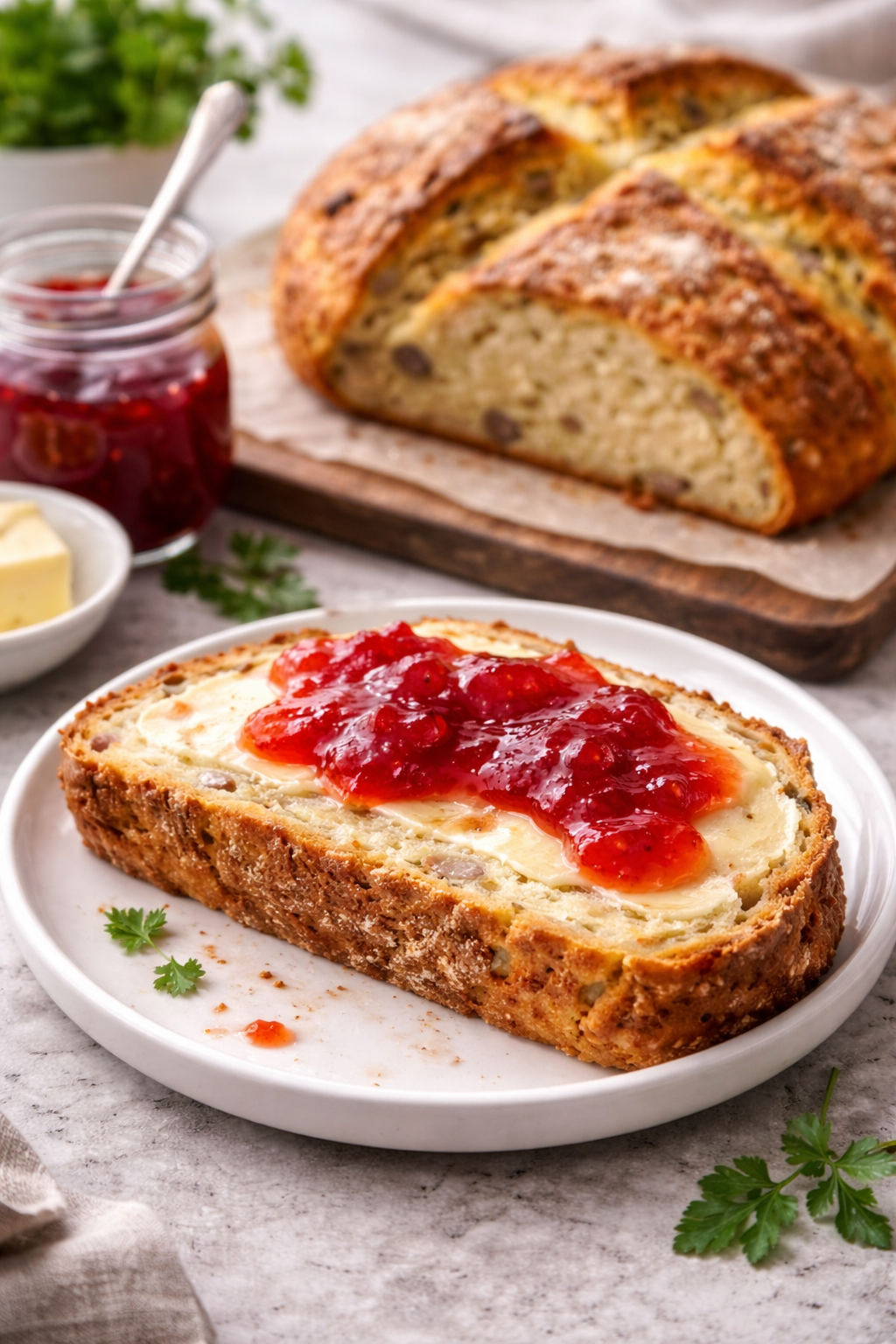
Every March, I get the urge to bake something simple, warm, and comforting — the kind of recipe that fills the kitchen with that fresh-bread smell without spending hours waiting for dough to rise.
That’s exactly why I love making Irish Soda Bread. There’s no yeast, no proofing, and no fancy techniques — just a bowl, a spoon, and about 40 minutes between you and a golden, crusty loaf.
This bread is rustic in the best way. The outside is crisp and crackly, while the inside stays soft and tender with a slightly crumbly texture that’s perfect for slathering with butter or dunking into a hearty stew.
It’s one of those reliable recipes I come back to again and again because it’s nearly impossible to mess up.
Whenever St. Patrick’s Day rolls around, this loaf is the first thing I bake. It pairs perfectly with corned beef dinners and cozy soups, but honestly, I make it year-round because it’s just that easy.
With a handful of pantry ingredients and no special equipment, it’s the kind of homemade bread anyone can pull off — even on a busy weeknight.
Why Is It Called Irish Soda Bread?
Irish Soda Bread gets its name from the simple leavening method that makes this loaf so quick and reliable to bake.
Instead of yeast, which requires rising time and careful handling, traditional Irish households used baking soda (also called “bread soda”) to help the dough rise.
When baking soda is combined with acidic buttermilk, it creates an immediate chemical reaction that produces tiny air bubbles, giving the bread lift and a tender crumb without any proofing or kneading.
Historically, this method became popular in Ireland during the 1800s because the ingredients were inexpensive and easy to keep on hand.
Soft wheat flour, baking soda, salt, and buttermilk were staples in many rural homes, making soda bread a practical everyday loaf that could be mixed and baked quickly in a cast-iron pot or over an open hearth.
It wasn’t fancy — it was simply dependable, filling, and perfect for feeding families.
That’s exactly why I still love making it today. Irish Soda Bread feels rustic and honest, like the kind of bread your grandmother would bake on a chilly afternoon.
It’s less about perfection and more about comfort — warm slices, plenty of butter, and something hearty to serve alongside a bowl of stew or soup.
Recipe Highlights
Every year around St. Patrick’s Day, I find myself craving something simple and homemade to go alongside all those hearty dinners, and Irish Soda Bread is always the first thing I bake.
It’s one of those old-fashioned recipes that feels comforting from start to finish — no yeast, no rising time, and no complicated steps.
Just a bowl, a spoon, and the smell of warm bread filling the kitchen in under an hour.
What I love most about this loaf is the texture. The outside bakes up beautifully golden and crusty, while the inside stays soft, tender, and slightly crumbly in that classic soda bread way.
It’s sturdy enough to slice thick for butter or jam, but still light enough to enjoy with soup or stew.
There’s something incredibly satisfying about cutting into a warm, rustic round straight from the oven.
It’s also incredibly reliable. Even beginner bakers can pull this off on the first try, which makes it one of my favorite “confidence-boosting” recipes to share with friends and family.
- No yeast or rising time
. - Ready in under 1 hour
. - Crispy golden crust
. - Soft tender interior
. - Beginner-friendly
Why This Recipe Works
Irish Soda Bread relies on baking soda and buttermilk instead of yeast, which means there’s no waiting for the dough to rise.
The acid in the buttermilk reacts with the baking soda, creating instant lift and producing a tender crumb without any extra effort.
It’s a beautifully simple chemical reaction that delivers consistent results every time.
Because there’s minimal mixing and no kneading, the bread stays soft rather than tough.
Overworking the dough develops gluten, which can make bread chewy, but keeping things gentle gives you that classic rustic, crumbly texture soda bread is known for.
Ingredient Notes
This bread uses basic pantry staples that work together to create the perfect rustic loaf.
- All-purpose flour – Provides structure and keeps the crumb tender
. - Baking soda – The leavening agent that replaces yeast
. - Salt – Enhances flavor and balances the bread
. - Sugar – Adds slight sweetness and improves browning
. - Buttermilk – Activates the baking soda and gives a tangy flavor
. - Butter – Adds richness and soft texture
. - Optional raisins or currants – Traditional add-ins for sweetness
How to Make My Corned Beef & Cabbage Sheet Pan Dinner
Step 1 – Preheat and prep: Start by preheating your oven to 400 degrees Fahrenheit and lining a baking sheet with parchment paper. This ensures even baking and easy cleanup.
Step 2 – Mix the dry ingredients: In a large bowl, whisk together the flour, baking soda, salt, and sugar. This evenly distributes the leavening so the bread rises properly.
Step 3 – Add the wet ingredients: Pour in the cold buttermilk and gently stir until a shaggy dough forms. Be careful not to overmix — soda bread should stay slightly rustic and tender, not smooth like sandwich dough.
Step 4 – Shape the loaf: Turn the dough onto a lightly floured surface and gently shape it into a round ball. Place it on the baking sheet and score a deep “X” across the top to help it bake evenly.
Step 5 – Bake until golden: Bake for 35 to 40 minutes until the crust is golden brown and the loaf sounds hollow when tapped on the bottom.
Step 6 – Cool slightly and serve: Let it rest for at least 10 minutes before slicing so the crumb sets properly.
The whole process is wonderfully straightforward — it feels more like assembling than baking.
Health & Ingredient Benefits
This bread uses basic, whole ingredients without preservatives or additives, which makes it a wholesome alternative to many store-bought loaves.
Buttermilk adds protein and calcium, while flour provides steady energy and substance to keep you full longer.
If you choose to use whole wheat or add oats, you can boost the fiber content even further.
Pairing it with soups, salads, or lean proteins creates a balanced, comforting meal that still feels nourishing.
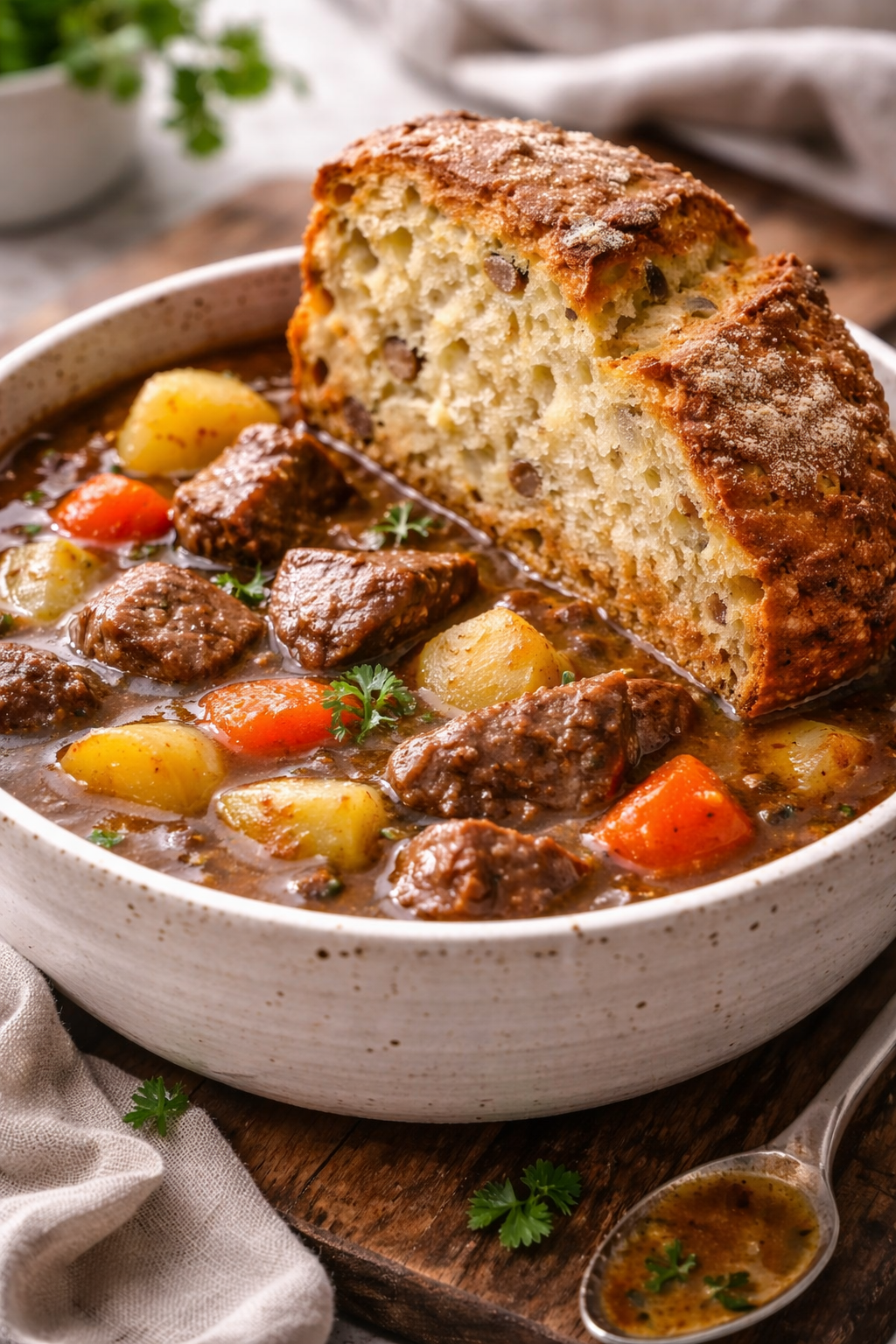
Serving Suggestions
This sheet pan dinner pairs beautifully with simple sides that complement its hearty flavor.
Keep things classic or add a festive twist.
- Irish soda bread
. - Whole grain mustard
. - Horseradish cream sauce
. - Simple green salad
. - Roasted Brussels sprouts
Occasions to Serve This Recipe
Irish Soda Bread is perfect for St. Patrick’s Day dinners, especially alongside corned beef and cabbage or hearty Irish stews.
It feels traditional and festive, yet incredibly easy to prepare even when you’re juggling multiple dishes.
I also love baking it year-round for cozy weekends, brunch spreads, or last-minute dinners when I want fresh bread without the hassle of yeast.
It’s just as good toasted with butter and jam the next morning as it is warm from the oven.
Variations & Substitutions
For a slightly sweeter loaf, stir in raisins or dried cranberries. This turns it into a lovely breakfast or tea bread that pairs beautifully with butter or honey.
Many traditional versions include raisins, and they add great texture.
If you prefer savory flavors, try adding shredded cheddar, fresh herbs, or even chopped green onions.
These mix-ins make the bread perfect for serving with soups or stews.
You can also swap part of the all-purpose flour for whole wheat flour or oat flour for a heartier, more rustic texture. Just keep the ratio balanced so the loaf stays tender.
Can I Make This Ahead Of Time?
Yes, but soda bread is best the day it’s baked. If you need to prepare ahead, you can mix the dry ingredients earlier and store them in a bowl until ready to add the buttermilk.
You can also bake the loaf a few hours ahead and rewarm it gently in the oven before serving. This brings back that fresh-baked texture and aroma.
Leftover toast beautifully, so even day-old slices still taste amazing with butter or jam.
Common Mistakes to Avoid
Using too much flour can make the loaf dry and crumbly. Measure carefully and avoid packing the flour into the cup.
A light hand makes a big difference.
Another mistake is overbaking. Soda bread can dry out quickly, so check it early and remove it as soon as it sounds hollow when tapped.
Lastly, skipping the buttermilk substitute can affect the rise. The acidity is essential for activating the baking soda, so don’t replace it with plain milk without adding lemon juice or vinegar.
Tips for the Best Irish Soda Bread
The biggest tip is to handle the dough gently. Overmixing or kneading too much can make the bread dense and tough.
Stir just until combined, then shape lightly. Also, don’t skip scoring the “X” on top — it helps the loaf bake evenly and gives it that classic look.
For an extra golden crust, brush the top lightly with buttermilk before baking.
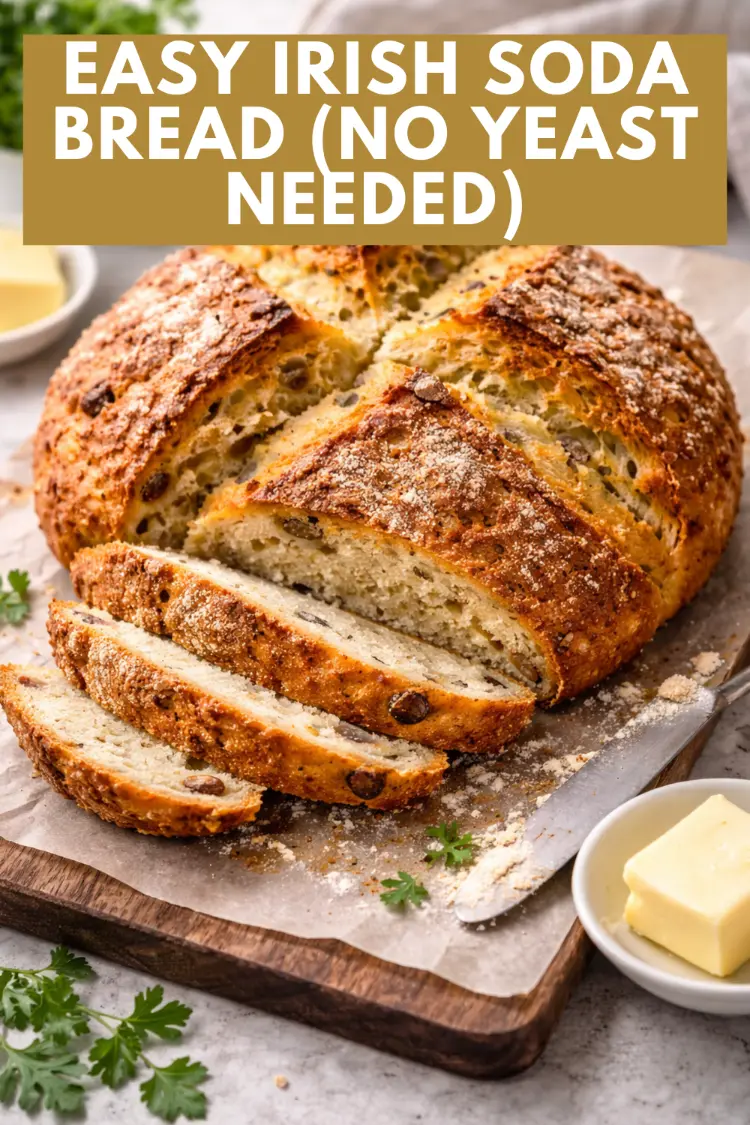
Easy Irish Soda Bread Recipe (No Yeast Needed)
Course: Bread / SideCuisine: IrishDifficulty: Easy8-10
slices10
minutes40
minutes240
kcalA rustic, no-yeast Irish Soda Bread with a crisp crust and tender crumb — perfect for soups, stews, or St. Patrick’s Day meals.
Ingredients
4 cups all-purpose flour
1 teaspoon salt
1 teaspoon baking soda
2 tablespoons sugar
2 tablespoons butter, melted
1 ¾ cups buttermilk
½ cup raisins (optional)
Directions
- Preheat oven and prepare pan: Preheat your oven to 400 degrees Fahrenheit and line a baking sheet with parchment paper or lightly dust it with flour to prevent sticking.
- Mix the dry ingredients: In a large mixing bowl, whisk together the all-purpose flour, baking soda, salt, and sugar until evenly combined. Breaking up any lumps now helps the bread rise evenly later.
- Add the buttermilk: Pour the cold buttermilk into the center of the dry ingredients. Using a wooden spoon or spatula, gently stir just until a shaggy dough forms. Stop mixing as soon as no dry flour remains to avoid overworking the dough.
- Shape the dough: Lightly flour your work surface and turn the dough out onto it. With floured hands, gently bring it together and shape into a round loaf about 1 ½ inches thick. Do not knead — simply form it into shape.
- Score the top: Transfer the dough to the prepared baking sheet. Using a sharp knife, cut a deep “X” about ½ inch into the top of the loaf. This helps the bread expand evenly and bake through the center.
- Optional crust finish: For a golden, bakery-style crust, brush the top lightly with extra buttermilk or melted butter before baking.
- Bake until golden: Place in the oven and bake for 35 to 40 minutes, or until the crust is deep golden brown and the loaf sounds hollow when tapped on the bottom. The internal temperature should read about 200 degrees Fahrenheit.
- Cool slightly before slicing: Remove from the oven and let the bread cool on a wire rack for at least 10 to 15 minutes. This allows the crumb to set and prevents it from becoming gummy when sliced.
- Slice and serve: Cut into thick wedges or slices and serve warm with butter, jam, or alongside soups and stews.
Notes
- Best served warm
- Use cold buttermilk
- Do not knead
Storage & Make-Ahead Tips
- Store wrapped at room temperature for 2 days
. - Freeze slices up to 3 months
. - Toast leftovers for the best texture
. - Rewarm in oven for fresh-baked taste
Frequently Asked Questions
Can I freeze Irish Soda Bread?
Yes, wrap tightly and freeze for up to 3 months. Thaw at room temperature and warm before serving.
Can I make this gluten-free?
Yes, use a quality gluten-free flour blend designed for baking and check that it contains xanthan gum.
Why is my bread crumbly?
Soda bread naturally has a rustic crumb, but too much flour or overbaking can make it overly dry
Can I use regular milk?
Yes, add one tablespoon of lemon juice or vinegar to make a buttermilk substitute.
Why is my bread dense?
It may be overmixed or under-leavened.
Can I make mini loaves?
Yes, reduce baking time by about 10 minutes.