

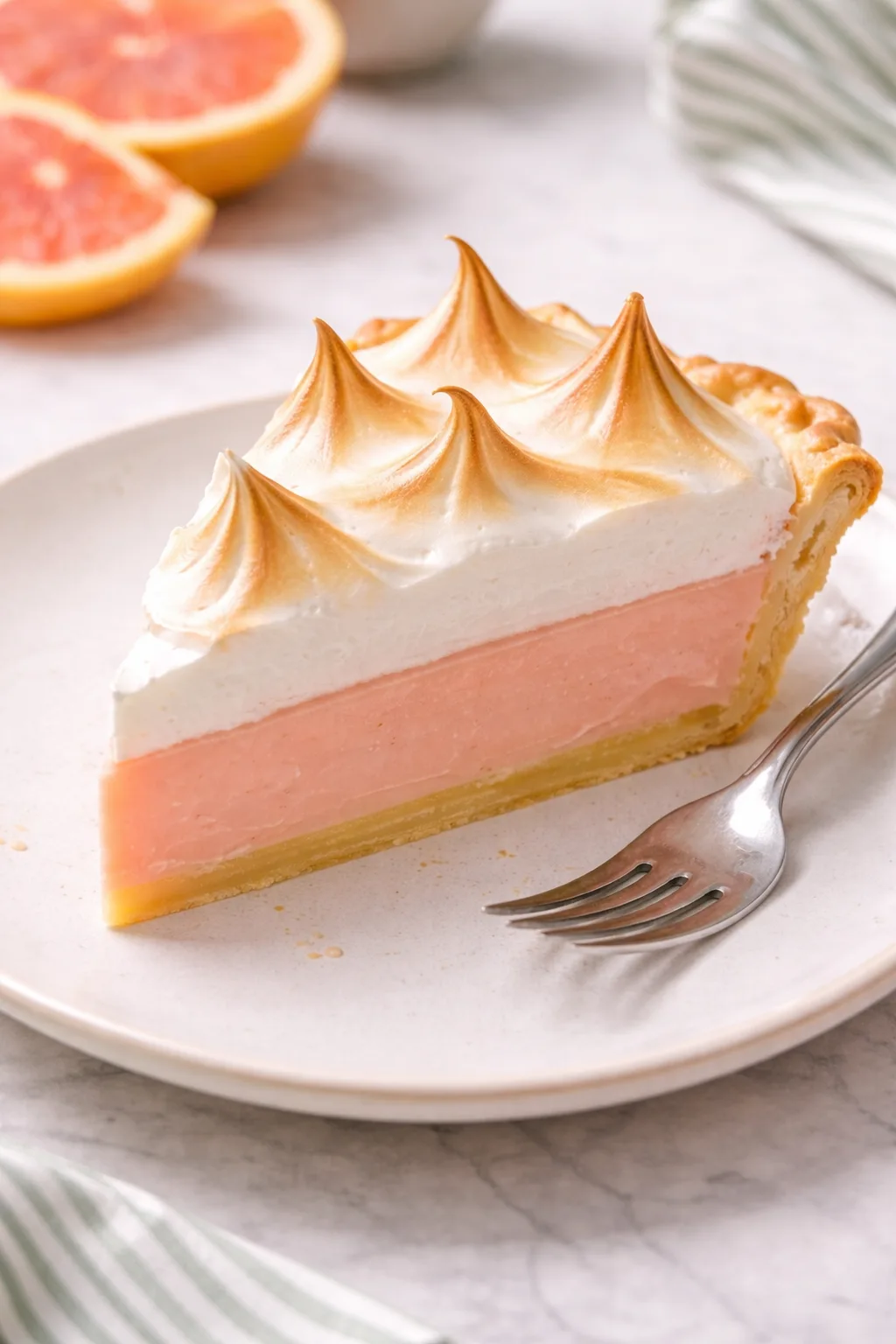
I’ve always loved citrus desserts, but grapefruit holds a special place for me because it delivers that perfect balance of tart, slightly bitter, and refreshing sweetness that feels a bit more grown-up than lemon.
This Grapefruit Meringue Pie is one of those desserts that surprises people—in the best possible way—after the very first bite.
The silky grapefruit filling is vibrant and smooth, nestled in a flaky pie crust and topped with a cloud of lightly toasted meringue.
It’s bright, elegant, and incredibly satisfying, making it ideal for holidays, spring gatherings, or anytime you want a dessert that feels both nostalgic and fresh.
Dietary Information
This recipe is vegetarian because it contains no meat, poultry, or fish. It is not vegan because it includes egg yolks, egg whites, and butter.
It is also not dairy-free because of the unsalted butter.
It is not gluten-free because a standard baked pie crust is typically made with wheat flour, and the FDA notes gluten occurs naturally in wheat, barley, and rye.
It is also not low-carb or keto because the recipe includes large amounts of granulated sugar plus a pie crust, which makes it a traditional dessert rather than a low-carb one.
Recipe Highlights
This Grapefruit Meringue Pie is all about contrast—cool, creamy filling against warm toasted meringue, and bold citrus flavor balanced by gentle sweetness.
Grapefruit juice gives the custard its signature tang, while egg yolks provide richness and structure for a smooth, sliceable filling.
Unlike heavier pies, this one feels light and refreshing, making it a wonderful alternative to lemon meringue.
The meringue topping adds height and drama while sealing in the filling, ensuring every slice looks as impressive as it tastes.
Why you’ll love this recipe:
• Bright, bold grapefruit flavor that’s refreshing and unique
• Silky citrus custard with a perfectly set texture
• Fluffy meringue topping that toasts beautifully
• Elegant dessert that feels bakery-worthy but approachable
• A wonderful twist on classic citrus meringue pie
Ingredient Notes
Each ingredient plays an important role in creating the structure, flavor, and balance of this pie.
• Prepared pie crust: A flaky crust provides the buttery base that balances the tart grapefruit filling. A baked shell ensures the custard sets properly without sogginess.
• Granulated sugar: Sweetens both the filling and the meringue, offsetting grapefruit’s natural bitterness.
• Cornstarch: Thickens the grapefruit custard so it slices cleanly and holds its shape.
• Salt: Enhances the citrus flavor and prevents the filling from tasting flat.
• Fresh grapefruit juice: The star of the recipe—freshly squeezed juice delivers vibrant citrus flavor and natural acidity.
• Egg yolks: Provide richness, color, and structure to the custard.
• Butter: Adds silkiness and rounds out the sharp citrus notes.
• Egg whites: Whipped into a glossy meringue that crowns the pie.
• Cream of tartar: Stabilizes the egg whites so the meringue holds firm peaks.
How to Make My Grapefruit Meringue Pie
Step 1: Prepare the grapefruit filling
In a medium saucepan, whisk together the granulated sugar, cornstarch, and salt. Gradually whisk in the fresh grapefruit juice until smooth. Place the pan over medium heat, whisking constantly, until the mixture thickens and begins to bubble.
Step 2: Temper the egg yolks
In a separate bowl, lightly whisk the egg yolks. Slowly add a ladle of the hot grapefruit mixture into the yolks while whisking constantly. This gently warms the eggs without scrambling them. Pour the yolk mixture back into the saucepan and continue cooking for one to two minutes until thick and glossy.
Step 3: Finish the filling
Remove the pan from heat and stir in the butter until fully melted. Pour the hot grapefruit custard into the baked pie crust, smoothing the surface.
Step 4: Make the meringue
Beat the egg whites and cream of tartar on medium speed until soft peaks form. Gradually add the sugar, beating until stiff, glossy peaks develop.
Step 5: Assemble and bake
Spread the meringue over the hot filling, sealing it to the edges of the crust. Bake until the meringue is lightly golden. Cool completely before slicing.
Serving Suggestions
• Serve chilled or at cool room temperature
• Pair with fresh berries for added sweetness
• Add a dollop of whipped cream for extra indulgence
• Serve with hot coffee or citrus tea
Variations & Substitutions
If grapefruit is too bold for your taste, this recipe adapts beautifully to a grapefruit–orange blend.
Replacing part of the grapefruit juice with fresh orange juice softens the tartness while keeping the citrus profile intact.
You can also use Meyer lemons for a sweeter, floral variation.
For a dairy-free option, substitute plant-based butter in the crust and use a cornstarch-thickened filling as written — the custard itself is naturally dairy-free.
The meringue remains unchanged, as it relies on egg whites rather than dairy.
If you prefer a less dramatic topping, you can replace the meringue with lightly sweetened whipped cream added just before serving.
This creates a softer, creamier finish while still highlighting the grapefruit flavor.
Can I Make This Ahead Of Time?
Yes — Grapefruit Meringue Pie can be partially made ahead, but timing matters. The crust and grapefruit filling can be prepared a day in advance and stored in the refrigerator, tightly covered, until you’re ready to add the meringue.
For best results, add and bake the meringue on the day you plan to serve the pie. Fresh meringue holds its shape and texture far better within the first 24 hours.
While leftovers are still delicious, the meringue may soften slightly over time.
If you must assemble everything ahead of time, store the pie uncovered in the refrigerator to reduce condensation, which can cause weeping.
Common Mistakes to Avoid
One of the most common mistakes is undercooking the grapefruit filling. If it doesn’t fully thicken on the stovetop, it won’t set properly in the pie, leading to a runny slice.
Make sure the mixture bubbles and coats the back of a spoon before pouring it into the crust.
Another issue is shrinking or weeping meringue. This usually happens when the meringue doesn’t seal to the crust or is spread over a cold filling.
Always spread the meringue while the filling is hot and push it right up against the crust edges.
Finally, slicing the pie too soon can cause the filling to collapse. Allow the pie to cool completely and chill for several hours before cutting for clean, picture-perfect slices.
Tips for the Best Grapefruit Meringue Pie
Use fresh grapefruit juice rather than bottled for the cleanest, brightest flavor. Pink or ruby red grapefruit works best, as it provides natural sweetness and beautiful color without overwhelming bitterness.
Zest carefully, avoiding the white pith, which can add harshness to the filling.
When making the meringue, ensure your bowl and beaters are completely clean and grease-free.
Even a small amount of fat can prevent the egg whites from whipping properly. Spreading the meringue over hot filling also helps cook the underside slightly, reducing the chance of weeping later.
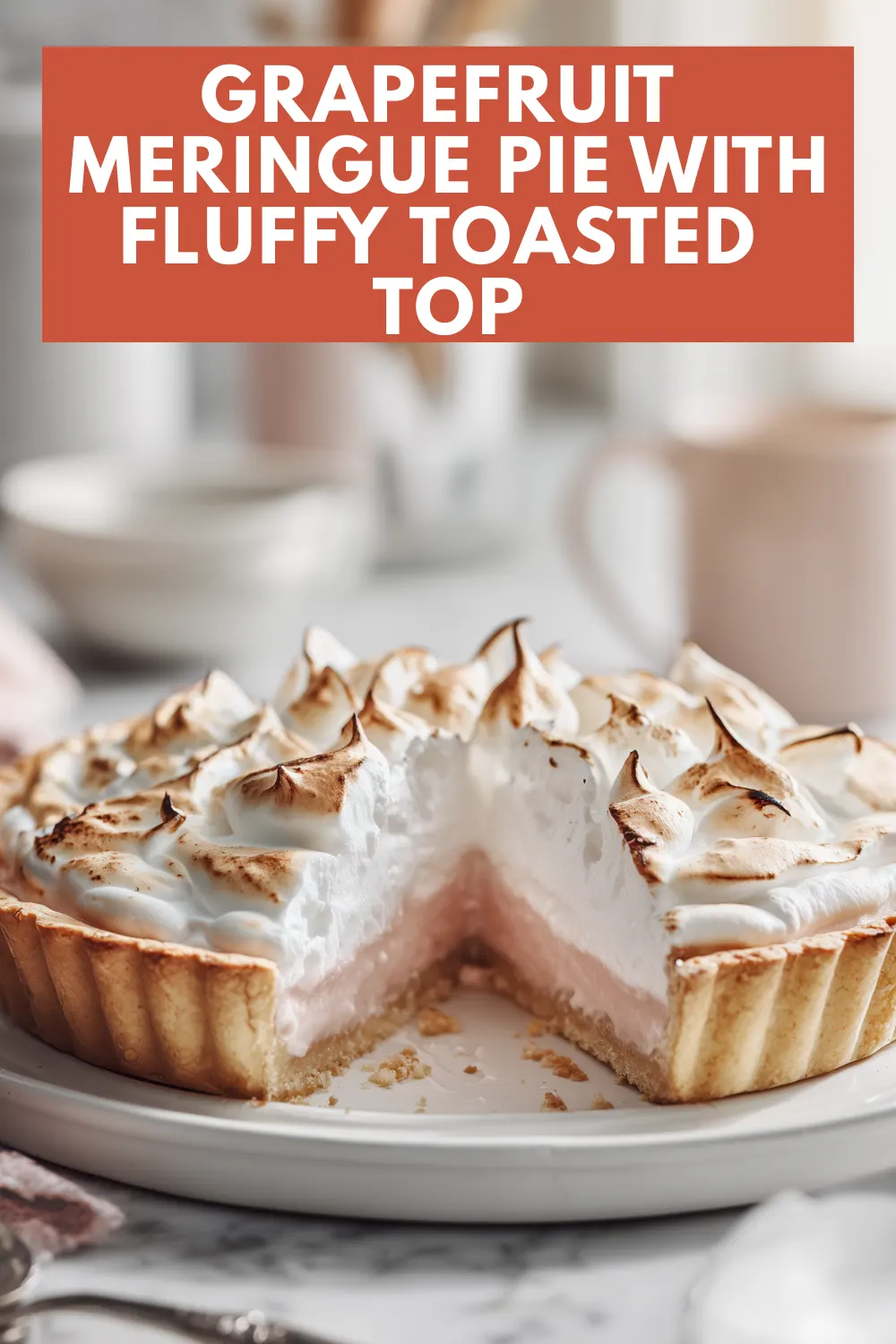
Grapefruit Meringue Pie with Bright Citrus Flavor
Course: DessertCuisine: AmericanDifficulty: Intermediate8
slices30
minutes25
minutes320
kcalThis Grapefruit Meringue Pie features a silky citrus custard, flaky crust, and cloud-like meringue topping. It’s bright, elegant, and perfect for citrus lovers looking for something a little different.
Ingredients
• 1 baked pie crust
• 1 cup granulated sugar
• ⅓ cup cornstarch
• ¼ teaspoon salt
• 1 cup fresh grapefruit juice
• 4 large egg yolks
• 2 tablespoons unsalted butter
• 4 large egg whites
• ¼ teaspoon cream of tartar
• ½ cup granulated sugar
Directions
- Prepare the filling by cooking the sugar, cornstarch, salt, and grapefruit juice until thickened. Temper the egg yolks carefully and return them to the saucepan to finish the custard. Stir in butter and immediately pour into the crust.
- Beat the egg whites with cream of tartar until soft peaks form, then slowly add sugar and beat to stiff peaks. Spread over hot filling, seal edges, and bake until golden.
- Cool completely before slicing for the cleanest cuts.
Notes
- Always use room-temperature egg whites for the best volume
- Slice with a clean, dry knife for sharp edges
- Let the pie cool fully before refrigerating
Storage & Make-Ahead Tips
• Store covered in the refrigerator for up to 3 days
• Avoid freezing—the meringue texture will suffer
• Best enjoyed within 24 hours for peak texture
Frequently Asked Questions
Is grapefruit meringue pie very bitter?
No, sugar and butter balance the citrus beautifully, creating a pleasant tartness rather than bitterness.
Can I use bottled grapefruit juice?
Fresh juice is highly recommended for the best flavor and consistency.
Why is my meringue weeping?
This usually happens if the meringue wasn’t sealed to the crust or if the humidity is high.
Can I freeze grapefruit meringue pie?
Freezing is not recommended. The custard and meringue textures will break down once thawed.