

Whenever I crave something that’s both nourishing and full of flavor, I make a big pot of Minestrone Soup.
It’s the kind of meal that feels like a warm hug straight from an Italian kitchen. Packed with vegetables, beans, pasta, and herbs simmered in a rich tomato broth, it’s hearty enough to be a meal on its own.
I love how every spoonful offers something different — a bit of tender pasta, a soft bean, a burst of tomato — all mingled together in one beautifully rustic dish.
Recipe Highlights
Minestrone Soup is Italy’s answer to cozy comfort food — simple, flavorful, and endlessly adaptable.
It’s a celebration of fresh vegetables and pantry staples that come together into a wholesome, satisfying meal.
Whether served as a light lunch or a filling dinner, this soup is perfect any time of year.
- Classic Italian vegetable soup with a rich tomato base
. - Loaded with pasta, beans, and fresh vegetables
. - Hearty, healthy, and easy to make in one pot
. - Naturally vegetarian and can be made vegan
. - Great for meal prep and freezes beautifully
Ingredient Notes
- Olive Oil: Adds rich flavor and helps sauté the vegetables.
. - Onion, Carrots & Celery: The aromatic base that builds savory depth.
. - Garlic: Brings warmth and a delicious aroma to the soup.
. - Zucchini & Green Beans: Add freshness and texture to balance the heartier ingredients.
. - Crushed Tomatoes: Create a flavorful tomato broth — use high-quality canned tomatoes for the best taste.
. - Vegetable Broth: Keeps the soup light but flavorful (use chicken broth for a richer version).
. - Kidney Beans & Cannellini Beans: Provide protein and heartiness; feel free to substitute with chickpeas or other beans.
. - Ditalini Pasta: A small pasta shape that holds its texture and absorbs the soup’s flavors.
. - Spinach or Kale: Adds color, nutrients, and freshness just before serving.
. - Italian Herbs: A blend of thyme, oregano, and basil gives that authentic Italian flavor.
. - Parmesan Cheese: Optional for garnish, but adds a salty, nutty finish.
How to Make My Minestrone Soup
- Sauté the Base: In a large soup pot, heat olive oil over medium heat. Add onion, carrots, and celery. Cook for 6–7 minutes until softened. Stir in garlic and cook for 1 minute more.
. - Add Tomatoes & Broth: Stir in crushed tomatoes, broth, and Italian herbs. Bring to a gentle simmer.
. - Add Vegetables & Beans: Add diced zucchini, green beans, kidney beans, and cannellini beans. Simmer for 15–20 minutes until vegetables are tender.
. - Add Pasta: Stir in ditalini pasta and cook for another 8–10 minutes until al dente. Add more broth if the soup thickens too much.
. - Finish & Serve: Stir in spinach or kale until wilted. Taste and season with salt and pepper. Serve hot, topped with Parmesan cheese and a drizzle of olive oil if desired.
Serving Suggestions
Serve your Minestrone Soup with a side of warm, crusty bread, garlic toast, or focaccia. For a heartier meal, pair it with a simple Italian salad or a slice of lasagna.
You can also serve it with extra Parmesan and a sprinkle of red pepper flakes for a little heat.
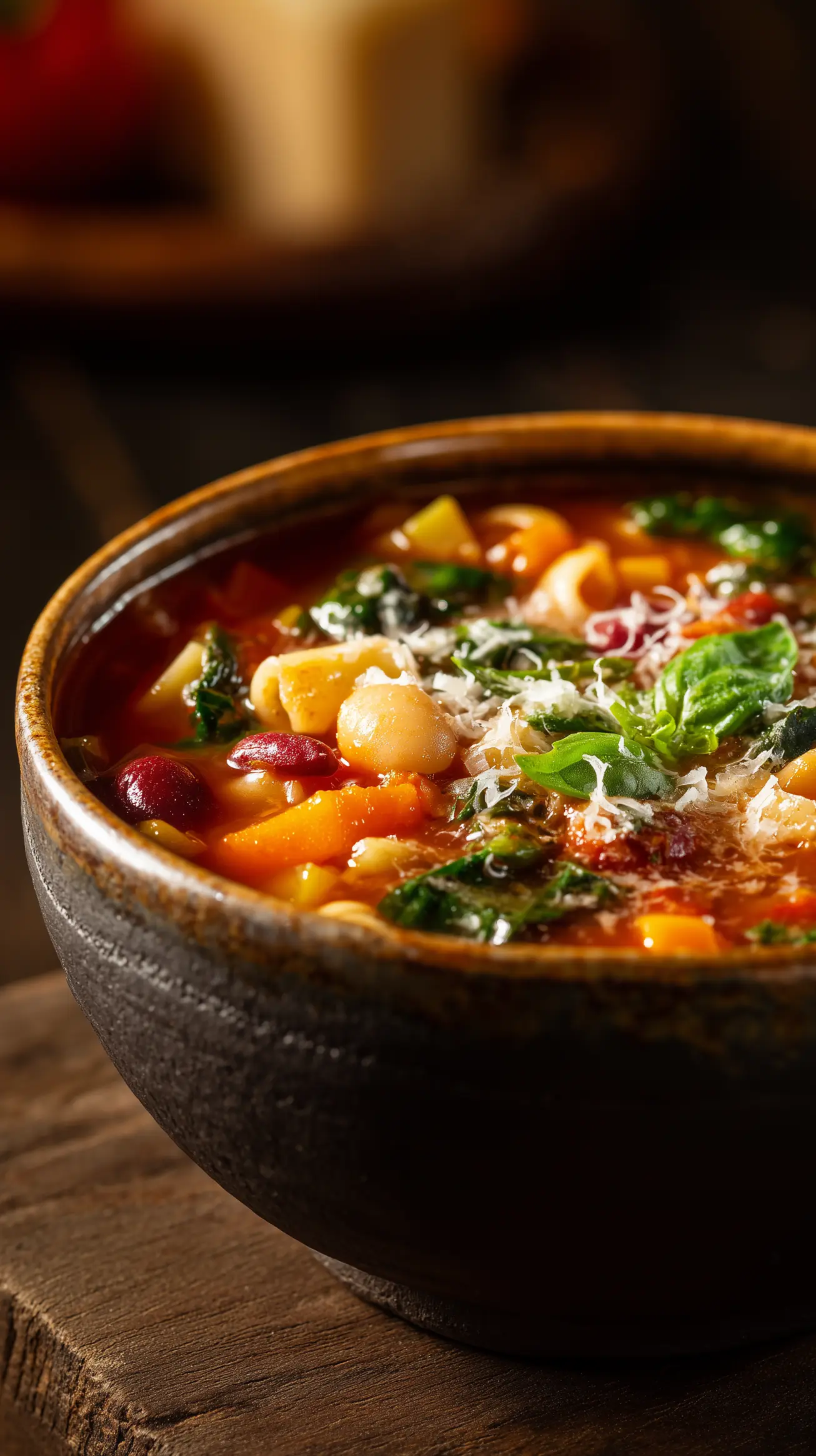
Tips for the Best Minestrone Soup
Sautéing the vegetables first helps build a flavorful foundation — don’t rush this step. Always cook the pasta directly in the soup to absorb all that rich tomato flavor.
If you plan to store leftovers, cook the pasta separately to prevent it from getting too soft.
Feel free to adapt this recipe seasonally — add corn, peas, or cabbage in winter, or fresh tomatoes and herbs in summer.
Variations & Substitutions
Minestrone Soup is one of the most flexible soups you can make, which is part of its timeless appeal.
You can easily adapt it based on the season, what you have on hand, or dietary needs without sacrificing flavor.
The key is keeping a balance of vegetables, beans, pasta, and a well-seasoned tomato broth.
For vegetable swaps, feel free to use what’s in season. In winter, cabbage, potatoes, or parsnips work beautifully.
In summer, fresh tomatoes, zucchini, green beans, and even corn add brightness. Leafy greens like spinach, kale, or Swiss chard can be added at the end for freshness and color.
If you want to change up the protein, chickpeas, lentils, or white beans can replace kidney or cannellini beans.
For a heartier, non-vegetarian version, you can add pancetta, Italian sausage, or shredded chicken at the beginning when sautéing the aromatics.
Pasta is also very adaptable. Ditalini is classic, but small shells, elbow macaroni, or even broken spaghetti work well.
For a gluten-free version, use gluten-free pasta or omit pasta entirely and add extra beans or vegetables for body.
Can I Make This Ahead?
Yes—Minestrone Soup is an excellent make-ahead recipe and actually tastes better after it sits.
The flavors deepen as the vegetables, herbs, and tomato broth meld together, making it ideal for meal prep or next-day leftovers.
If you plan to make it ahead, consider cooking the pasta separately and adding it just before serving.
Pasta tends to absorb liquid as it sits, which can make the soup thicker than intended. Storing the pasta separately helps maintain the perfect broth-to-ingredient ratio.
This soup also reheats beautifully. Simply warm it on the stovetop over medium heat, stirring occasionally.
If it has thickened, add a splash of broth or water to loosen it back to your preferred consistency.
Minestrone Soup freezes well, too, especially if you leave out the pasta before freezing. Freeze in airtight containers for up to three months, then add freshly cooked pasta when reheating for the best texture.
Common Mistakes to Avoid
One of the most common mistakes when making minestrone is skipping the sautéing step.
Cooking the onion, carrots, celery, and garlic in olive oil before adding liquids builds a flavorful base that makes the soup taste rich rather than flat. Don’t rush this step—it’s essential.
Another mistake is overcooking the pasta. Because pasta continues to soften as the soup sits, it’s best to cook it just until al dente.
If you’re planning leftovers, cooking the pasta separately is the safest option to avoid mushy soup.
Using too little seasoning is another pitfall. With so many vegetables and liquids involved, minestrone needs proper seasoning.
Taste as you go and adjust salt, pepper, and herbs near the end of cooking to ensure balanced flavor.
Finally, avoid overcrowding the soup with too many ingredients. While minestrone is hearty, adding too much of everything can overwhelm the broth.
Aim for balance—each spoonful should have vegetables, beans, pasta, and broth working together, not competing.
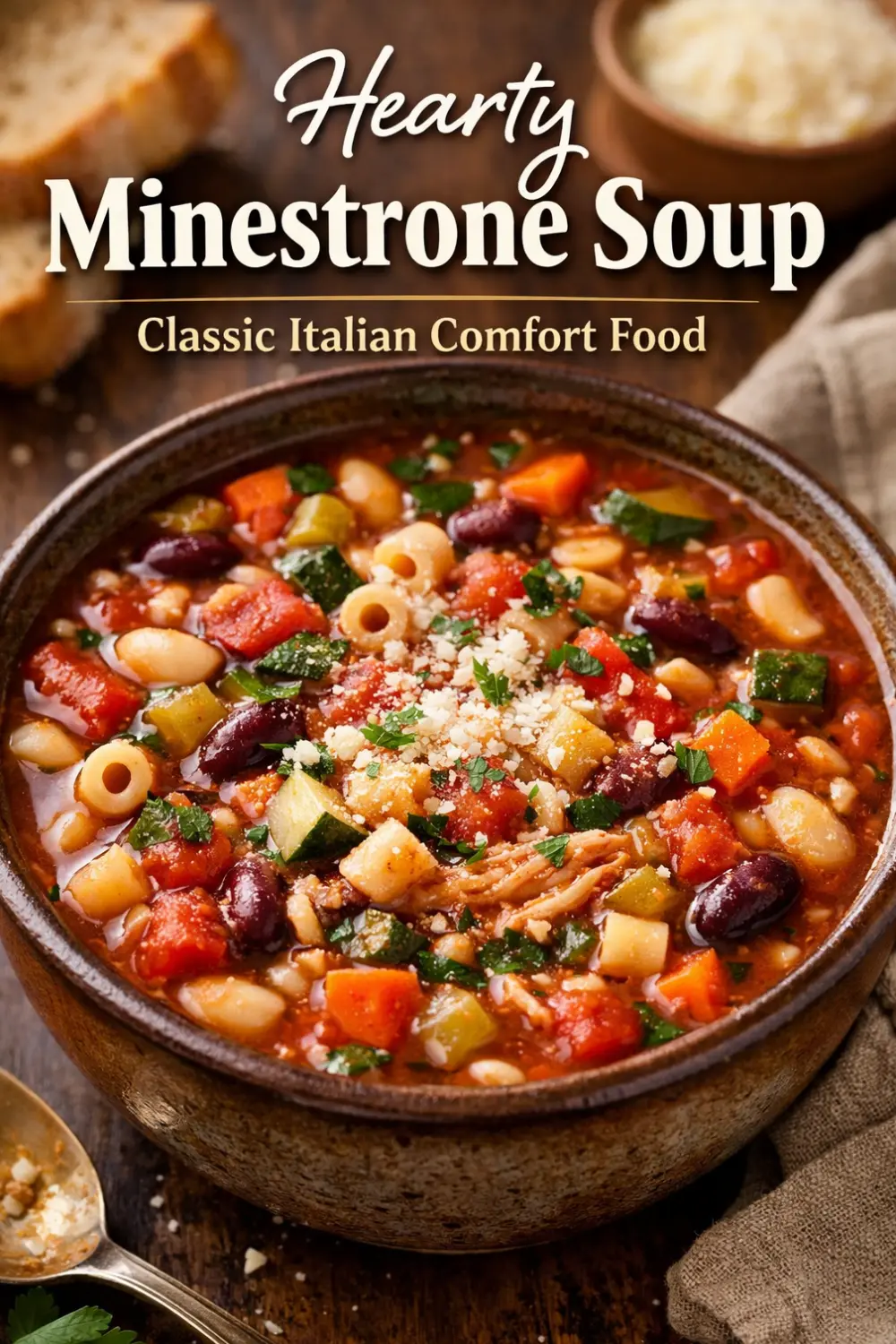
Minestrone Soup – Hearty Italian Comfort in a Bowl
Course: Main Course, SoupCuisine: ItalianDifficulty: Easy6
servings15
minutes40
minutes390
kcalThis hearty minestrone is a classic Italian comfort dish made with tender vegetables, beans, pasta, and a rich tomato broth. It’s wholesome, satisfying, and perfect for cozy nights or make-ahead meals.
Ingredients
2 tablespoons olive oil
1 medium onion, diced
2 medium carrots, sliced
2 celery stalks, chopped
3 cloves garlic, minced
1 medium zucchini, diced
1 cup green beans, chopped into 1-inch pieces
1 can (14 ½ ounces) crushed tomatoes
6 cups vegetable broth
1 can (15 ounces) kidney beans, drained and rinsed
1 can (15 ounces) cannellini beans, drained and rinsed
¾ cup ditalini pasta (or elbow macaroni)
1 teaspoon dried basil
1 teaspoon dried oregano
½ teaspoon dried thyme
½ teaspoon salt (plus more to taste)
½ teaspoon black pepper (plus more to taste)
2 cups fresh spinach or chopped kale
¼ cup grated Parmesan cheese (optional, for garnish)
Directions
- Heat olive oil in a large pot over medium heat.
- Add onion, carrots, and celery. Sauté for 6–7 minutes until softened.
- Stir in garlic and cook for another minute.
- Add crushed tomatoes, vegetable broth, basil, oregano, thyme, salt, and pepper. Bring to a simmer.
- Add zucchini, green beans, kidney beans, and cannellini beans. Simmer uncovered for 15–20 minutes.
- Stir in ditalini pasta and cook for 8–10 minutes until tender.
- Add spinach or kale and cook until wilted.
- Taste and adjust seasoning with salt and pepper.
- Serve hot, garnished with Parmesan cheese and a drizzle of olive oil.
Notes
- To make it vegan, skip the Parmesan or use a dairy-free substitute.
- Substitute any small pasta shape you have on hand.
- Add a pinch of red pepper flakes for a little spice.
- For extra richness, stir in a spoonful of pesto just before serving.
Storage & Leftovers
Store leftovers in an airtight container in the refrigerator for up to 4 days. If the pasta absorbs too much broth, add a splash of water or broth before reheating.
For longer storage, freeze the soup without pasta for up to 3 months. Add freshly cooked pasta when reheating for the best texture.
Frequently Asked Questions
What makes minestrone different from other vegetable soups?
Minestrone is heartier than most vegetable soups because it includes beans and pasta, making it a complete, filling meal rather than just a light starter.
Can I make minestrone vegan?
Yes, minestrone is naturally vegan if you use vegetable broth and skip the Parmesan garnish or replace it with a dairy-free alternative.
What is the best pasta to use for minestrone?
Small pasta shapes like ditalini, small shells, or elbow macaroni work best because they fit easily on a spoon and cook evenly in the broth.
Why did my minestrone turn too thick?
The pasta and beans absorb liquid as the soup sits. Simply add more broth or water when reheating to restore the desired consistency.
Can I use fresh tomatoes instead of canned?
Absolutely. Use about 2 to 3 cups of chopped fresh tomatoes. You may need to simmer slightly longer to develop a rich tomato flavor.
How long does minestrone last in the refrigerator?
Stored in an airtight container, minestrone will keep well for up to 4 days in the refrigerator and often tastes even better the next day.